

Ethical outsourcing means choosing partners that provide fair pay, responsible working conditions, transparent employment practices, and appropriate worker protections, then continuing to monitor those standards throughout the relationship. It is not a one-time decision. It is an ongoing commitment to the people doing the work.
I've always believed outsourcing should work for both sides. Businesses should be able to access great global talent, reduce costs, and grow more efficiently. At the same time, the people they hire should receive fair compensation, meaningful work, and opportunities to build long-term careers. Those outcomes don't have to compete.
The challenge is turning those principles into practice. In this guide, I'll walk through how to outsource ethically, from setting fair pay standards and conducting supplier due diligence to evaluating providers, reviewing contracts, and making sure your standards continue to be met once the work begins.
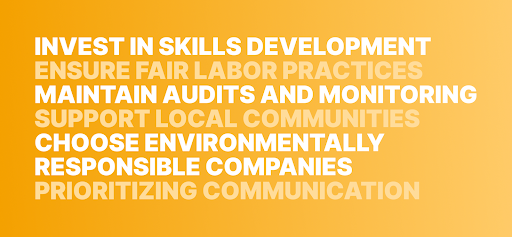
Understanding the Ethics of Outsourcing
Ethical outsourcing is the practice of accessing global talent through partnerships that prioritise fair pay, responsible working conditions, transparency, and worker protections alongside commercial efficiency.
The ethics of outsourcing are about making sure business efficiency does not come at the expense of the people doing the work. As corporate social responsibility (CSR) has become a bigger part of how companies operate, outsourcing decisions increasingly need to reflect the same standards businesses apply to their own teams.
Ethical outsourcing balances commercial goals with fair treatment, transparency, and responsible hiring.
In practice, that comes down to four things:
- Fair pay. Compensation should reflect the role, skills, experience, and local context, rather than simply targeting the lowest possible wage.
- Good working conditions. People should have reasonable hours, clear expectations, appropriate protections, and a way to raise concerns.
- Transparency. Businesses should understand who is doing the work, how they are compensated, and whether subcontractors or other intermediaries are involved.
- Responsible hiring. Recruitment, contracts, and working arrangements should be fair, clear, and appropriate for the countries involved.
These principles sit at the heart of ethical and responsible outsourcing. The harder part is making sure they carry through into how you choose a provider and manage the relationship.
How to Outsource Ethically: A Step-by-Step Process
To outsource ethically, set clear standards for how people should be paid and treated, then choose partners that can demonstrate those standards in practice. The process should cover compensation, due diligence, employment arrangements, working conditions, and transparency.
1. Set Fair Pay Standards Before Comparing Providers
Fair pay means paying people appropriately for their skills, experience, responsibilities, and local cost of living, rather than simply finding the lowest rate a market will accept.
I've never seen a problem with outsourcing reducing costs. That's one of the reasons businesses do it. The mistake is assuming the cheapest person creates the most value.
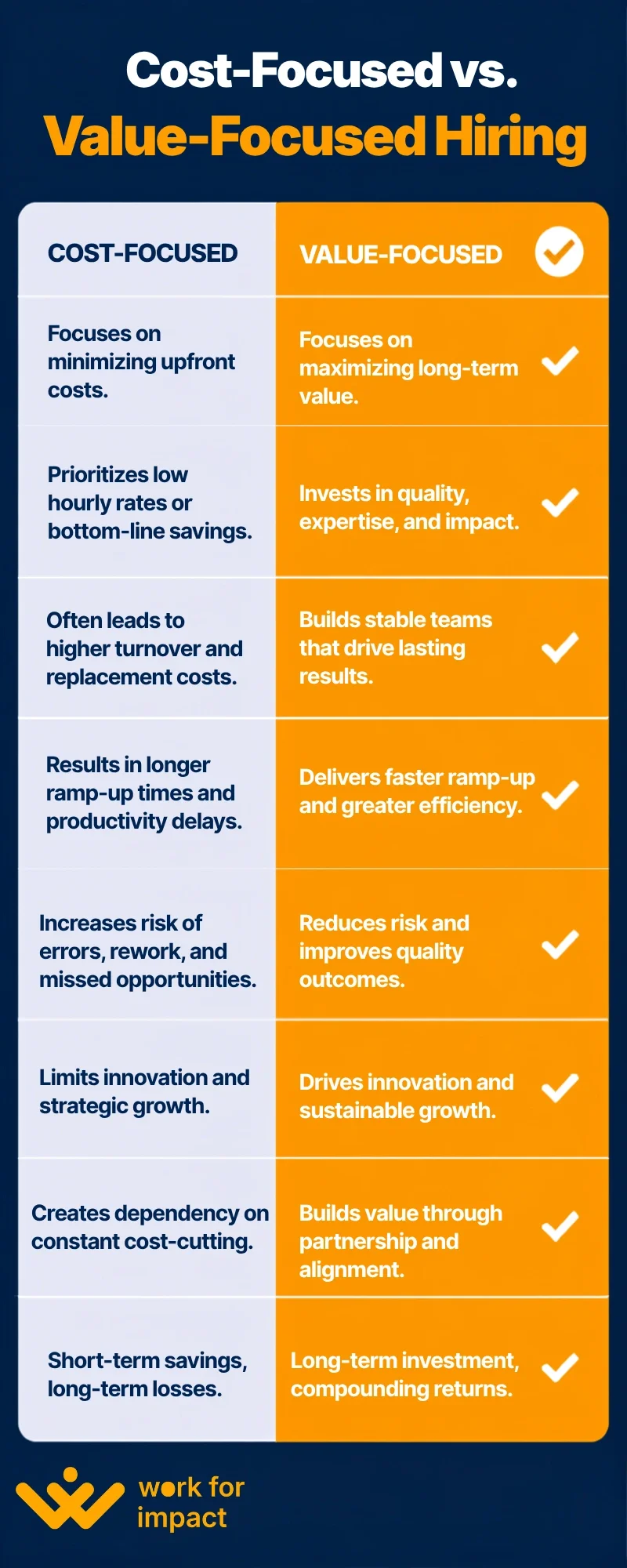
From our 2025 Impact Study, we've seen that fair pay and good business outcomes can go together. Individuals placed through Work for Impact see an average 2x increase in income, while clients benefit from people who stay and grow with their businesses.
That retention has real value. Replacing people means recruiting again, onboarding again, and rebuilding knowledge that has walked out the door. Profit Reimagined is a good example: its first Work for Impact hire is still with the company today.
For me, that's a better way to think about cost. Paying a little more for the right person can be far less expensive than repeatedly replacing the cheapest one.
2. Conduct Due Diligence on Outsourcing Providers
Due diligence helps you understand whether a provider's ethical commitments match how it actually operates. Don't just look at what a company says. Look for evidence.
I'd focus on:
- Fair pay: How is compensation set, and what does talent actually receive?
- Responsible hiring: How are people recruited, vetted, and supported?
- Compliance: How are contracts, worker classification, data security, and local regulations managed?
- Transparency: Are fees, margins, and subcontracting arrangements clear?
- Working conditions: How does the provider handle working hours, wellbeing, and worker concerns?
- Social impact: Does it create meaningful opportunities, invest in skills, or contribute to the communities where its talent lives?
- Independent standards: Can it point to credible certifications, such as B Corp, or measurable impact reporting?
I've found these signals tell you far more about a potential outsourcing partner than an ethics policy on its website.
3. Understand Who Employs or Contracts the Talent
Before outsourcing, understand exactly what relationship exists between the provider and the people doing the work. No engagement model is inherently ethical or unethical, but some make different aspects of responsible hiring easier to manage.
|
Engagement model |
Who employs or contracts the talent? |
Ethical considerations |
|
Traditional BPO |
BPO employs the worker |
Check pay, conditions, worker voice, and visibility |
|
Staffing partner |
Agency supports the hiring or contractor relationship |
Can provide transparency, direct relationships, and ongoing support |
|
Employer of Record (EOR) |
EOR legally employs the worker |
Helps manage local employment, benefits, and compliance |
|
Direct contractor |
Business contracts directly with the professional |
High visibility, but the business carries more responsibility |
The table shows how that responsibility shifts between engagement models. A BPO or EOR takes on more formal responsibility for the worker, while staffing and direct contractor models can give businesses a more direct relationship with talent. For ethical outsourcing, the important question is whether the model provides enough transparency, accountability, and support to protect the people doing the work.
For me, the model matters less than what happens within it. You should know who is responsible for pay, contracts, compliance, and support — and have enough visibility to know that people are being treated fairly.
4. Check Working Conditions and Worker Protections
Before hiring through an outsourcing provider, check how the people doing the work will actually be treated. Fair pay matters, but so does the environment around the work.
I’d check:
- Working hours: Are hours reasonable, and how is overtime handled?
- Worker protections: Are there clear policies covering discrimination, harassment, health, and safety?
- Worker voice: Can people raise concerns safely, and is there a clear grievance process?
- Expectations: Are responsibilities, performance expectations, and terms of work clear from the start?
- Development: Are people given opportunities to learn new skills, take on more responsibility, and progress?
I've found that if you want people to stay and do good work, you have to give them a working relationship worth staying for. Ethical outsourcing is about how you hire people and how they're treated once they're part of the team.
5. Build Transparency Into the Relationship
A sustainable outsourcing partnership shouldn't become a black box. On the other side of the contract are real people doing the work, and you should know who they are, how they're paid, and how they're being treated.
I've found that direct communication makes a big difference. When people can speak directly with the business they support, they get more context, build stronger relationships, and have a greater sense of ownership over their work.
That visibility works both ways. You understand the people behind the work, and they understand the business they're helping to build.
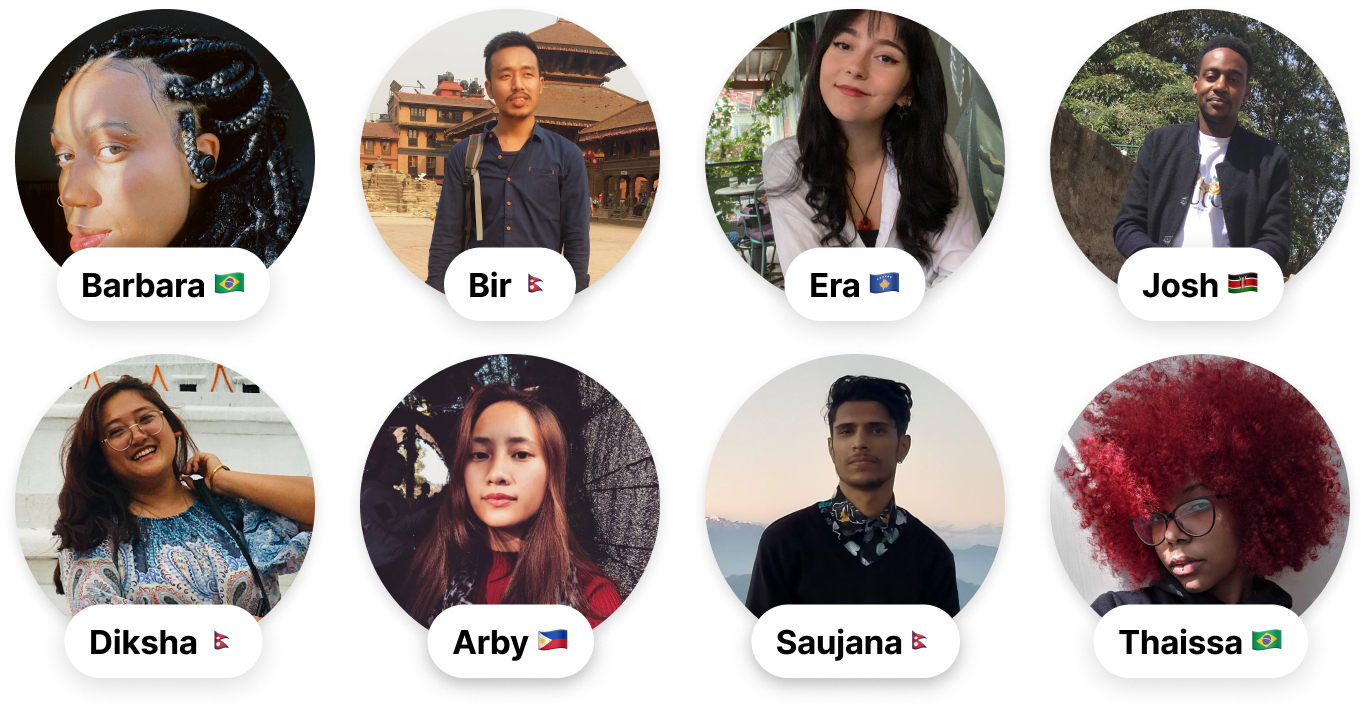
The more open the relationship is, the easier it is to build trust, spot problems early, and make sure the reality of the work matches the standards you've set.
6. Treat Outsourced Talent as Part of Your Team
One of the classic mistakes in outsourcing is creating two teams, often without intending to. There's the internal team with access and context, and the outsourced team sitting somewhere outside it.
I've found the better approach is to build one team. Include people in the right conversations, give them context, listen to their ideas, and give them opportunities to take on more responsibility.
Skills development should apply across the team. If outsourcing changes what your existing employees do, look at how you can retrain them for new or higher-value roles. And invest in the development of your outsourced team too, so people can build their skills and grow with the business.
When you invest in people on both sides, you build more knowledge, ownership, and longer-term relationships. That's a much healthier model than treating outsourced roles as interchangeable capacity.
Questions to Ask Before Signing an Outsourcing Contract
Before signing an outsourcing contract, ask questions that establish who will do the work, how they'll be paid and treated, who is responsible for them, and how you'll know your ethical standards are being met.
I’d focus on these:
- How do you determine fair compensation, and what does the person actually receive? Ask about fees or deductions too.
- Who employs or contracts the people doing the work? Understand the engagement model and where responsibility sits.
- Do you subcontract any work? If so, check whether the same standards apply throughout the chain.
- How do you protect workers? Ask about working hours, overtime, grievances, and how people can raise concerns.
- How do you manage local compliance? Clarify responsibility for contracts, classification, and labour requirements.
- Can we communicate directly with our team? Direct relationships make transparency much easier.
For me, these questions come back to one thing: do you understand the experience of the people doing the work? A good outsourcing partner should make that easy to see. You should know who your people are, what they earn, how they're supported, and have the opportunity to build a genuine relationship with them.
How to Outsource Ethically with Work for Impact
Ethical outsourcing works when businesses can access great global talent without compromising on fair pay, transparency, or how people are treated.
That's the model we've built at Work for Impact. As a Certified B Corporation, we're held to high standards of social and environmental performance, transparency, and accountability. We help companies find skilled professionals around the world while supporting the contracts, payments, compliance, and long-term relationships that make global hiring work.
The impact goes further through Pathways, where we invest in education and skills development for young people from underserved communities.
If you're evaluating outsourcing partners or building a global team, talk to our team. We can help you find the right people, choose the right engagement model, and build a team that works for your business and the people behind it.
Frequently Asked Questions
What are the benefits of Ethical Outsourcing?
Ethical outsourcing gives businesses access to global talent while ensuring fair treatment, transparent pay, and responsible working practices. It can reduce costs sustainably, improve retention by creating better long-term opportunities for talent, and reduce hiring and operational risk through greater transparency and stronger processes.
What is the most ethical way to outsource?
The most ethical way to outsource is to choose a model that combines fair pay, good working conditions, responsible hiring, and transparency. You should know who is doing the work, how they're compensated, and who is responsible for supporting them throughout the relationship.
How can you tell if an outsourcing company is ethical?
Look for evidence rather than claims. Ask about compensation, working conditions, worker protections, subcontracting, compliance, and social and environmental impact. Independent standards such as B Corp certification can provide additional assurance, but they shouldn't replace your own due diligence.
Can outsourcing be ethical and still reduce costs?
Yes. Ethical outsourcing can reduce costs through access to global talent, different local market rates, and more efficient operating models rather than simply paying people as little as possible. The better question is whether you're getting good value while the people doing the work are being paid fairly.
What should be included in an ethical outsourcing contract?
An ethical outsourcing contract should clearly define responsibilities around compensation, working conditions, worker protections, subcontracting, compliance, and transparency. It should also explain how standards will be monitored and what happens if they're not met.
How do you maintain ethical standards after outsourcing?
Keep reviewing the relationship after the contract is signed. Monitor pay, working conditions, worker feedback, compliance, and performance, and maintain direct communication with the people doing the work where possible. Ethical outsourcing is an ongoing responsibility, not a one-time supplier check.